At 19 years old, I read a newspaper column titled "This Shuibu Is Not My Friend." The columnist alleged that a man identified as Shuibu had fraudulently withheld money owed to retirees and pensioners. Even at that young age, I wondered how anyone could embezzle millions of naira. But what troubled me even more was imagining the people whose money had allegedly been taken.
I imagined working for 35 years as a government employee, giving my time, energy, and dedication to public service, only to discover at retirement that someone had taken the money I was counting on. By then, I might be too old or frail to work, possibly dealing with the health challenges that accompany ageing. I might need medical attention for joint pain or other conditions, only to find that the retirement benefits meant to support me were no longer available. I still think about that possibility and wonder whether the allegations were investigated and whether anyone was held accountable.
Recently, I received a cheque from the Texas Juvenile Justice Department through the Employees Retirement System (ERS). I had worked there for just two years as a non-immigrant employee. When I left, I was given the option of withdrawing my retirement contributions or leaving them in the system. I chose to have the money sent to me, and within a few weeks, the cheque arrived. I did not need to know anyone personally or lobby an official to receive what was due to me.
That experience brought back the question I had asked myself years earlier: why do public institutions in countries such as Nigeria, Kenya, Ghana, and Egypt struggle to protect citizens' resources from fraud and corruption? What makes it difficult to build systems in which public money is managed transparently, obligations are honoured, and people can trust that the benefits they have earned will reach them?
These questions deserve serious, evidence-based investigation. Corruption is a complex problem with political, economic, and institutional dimensions. Understanding it requires more than blaming individuals; it requires examining the systems that allow misconduct to occur and make accountability difficult.
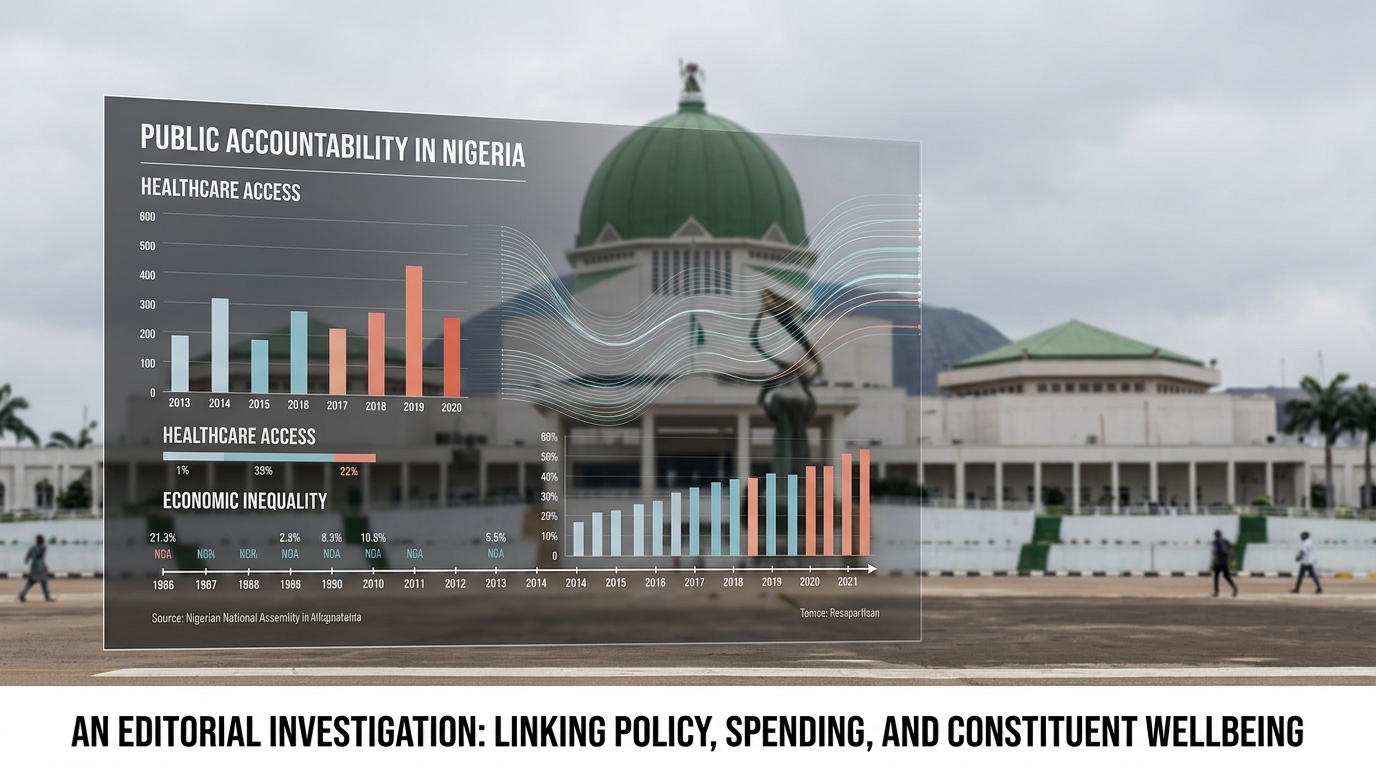
The problem remains a serious concern across the continent. According to the 2025 Corruption Perceptions Index published by Transparency International, Nigeria scored 26 out of 100 and ranked 142nd among 182 countries. The article's cited reports also place Sub-Saharan Africa among the lowest-performing regions, with an average score of 32.
These figures are not a direct measurement of every corrupt act, nor do they mean that every public official is corrupt. The index measures perceived levels of public-sector corruption using expert and business assessments. Nevertheless, the results highlight continuing concerns about public integrity, institutional accountability, and the management of public resources.
The question is not simply whether corruption exists. We must also ask what it costs ordinary people when public funds are mismanaged, diverted, or lost.
Corruption is often discussed as a political or financial issue, but its consequences can reach deeply into people's health and everyday lives. When public resources fail to reach the services for which they were intended, citizens may be left to pay for essential needs themselves.
The World Bank review cited in the original article reports that out-of-pocket payments account for a very high proportion of Nigeria's total health expenditure. It also reports that health-related expenses push more than one million Nigerians into poverty each year. These figures point to the financial burden faced by families who must pay directly for medical care, sometimes when they can least afford it.
The article also highlights the gap between public health spending and the commitments made by African governments in the 2001 Abuja Declaration. Such gaps raise important questions about how governments allocate resources, how public spending is monitored, and whether budgetary commitments translate into accessible services.
Research by Gupta, Davoodi, and Tiongson, published as an International Monetary Fund working paper in 2000, found an association between higher levels of corruption and higher child and infant mortality. This is a reminder that corruption is not an abstract concept confined to government offices. It can be associated with outcomes that affect whether people receive essential services and whether children survive and thrive.
For the pensioner I imagined at 19, money withheld from retirement benefits could mean more than financial loss. It could mean a missed doctor's appointment, an unfilled prescription, or treatment delayed because the money needed to pay for it is unavailable.
Africa also faces significant losses through illicit financial flows. The United Nations Conference on Trade and Development estimated that the continent lost approximately US$88.6 billion annually through illicit financial flows in its 2020 Economic Development in Africa Report. The report estimated this amount at around 3.7 per cent of Africa's GDP.
These flows have multiple causes and should not all be treated as identical forms of corruption. However, they raise serious concerns about resources leaving African economies instead of being available for productive investment and development.
When public resources are lost, the consequences may be felt in healthcare, education, infrastructure, social protection, and other essential services. Citizens may face higher personal costs, fewer opportunities, and weaker public institutions. The burden can be particularly severe for low-income households, pensioners, and people who depend heavily on public services.
Addressing corruption therefore requires more than public condemnation. It requires credible research, transparent institutions, effective oversight, and systems that make it possible for citizens to understand what their representatives are doing on their behalf.
As a Nigerian citizen and a public health scientist, I believe I have a role to play in seeking answers to these questions. That belief has led to the launch of Assess Your Representative Members for Justice in Nigeria, a new initiative under Impact Project.
The initiative will research policies and bills sponsored by members of Nigeria's House of Representatives and publish findings to help citizens better understand the work of their elected representatives. The intention is to make information more accessible so that citizens can make informed decisions about who represents them and how those representatives contribute to public life.
This work must be evidence-based. It should not be an exercise in political attacks or unverified accusations. It should involve examining available records, assessing policy proposals, documenting findings, and presenting information clearly enough for citizens to understand.
The initiative is at the beginning of its journey, and meaningful research will require collaboration. We welcome credible data sources, research suggestions, and contributions from people who have knowledge of public policy, governance, economics, public health, and institutional accountability.
Corruption in Africa is a subject that deserves deeper research, particularly when we consider its relationship with public health, economic opportunity, and the quality of public institutions. We need to understand not only where resources are lost, but also how those losses affect people and what practical measures can help prevent them.
At Impact Project, we believe that accountability should be supported by evidence and public participation. We want to hear your opinions, learn from credible data, and collaborate with people who can help us investigate these issues responsibly.
If you have relevant research, reliable data sources, or suggestions for how this initiative should approach the work, please reach out to us. Your contribution could help strengthen the quality and usefulness of this research.
Corruption is not just about money disappearing. It is also about the opportunities, services, and dignity that citizens may lose when public resources are not managed responsibly.
Together, we can work toward a better-informed public and stronger accountability.